
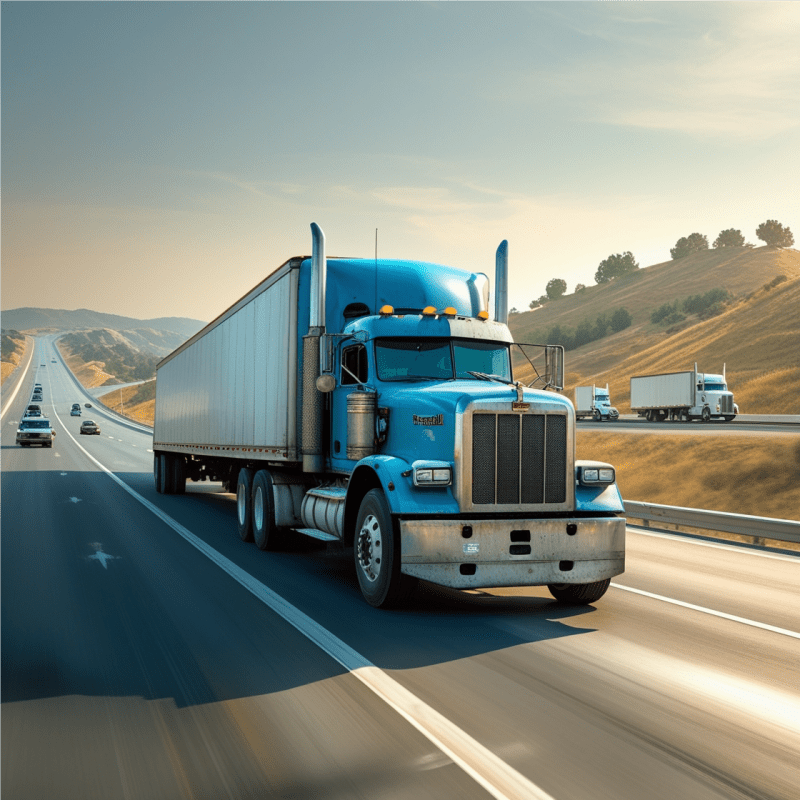
USDOT Required Equipment in Every Truck
The Federal Motor Carrier Safety Administration and Department of Transportation require certain vehicles to maintain specific emergency equipment. FMCSA-regulated equipment standards apply to vehicles:
- With a gross vehicle or combined weight rating over 10,000 pounds
- Including buses with over eight passengers (for compensation) or 15 passengers (non-compensation)
- Transporting any hazardous material that requires a placard
If your vehicle falls into either category, confirm you have the following equipment easily accessible in your vehicle.
Fire Extinguishers
You must have a portable fire extinguisher that doesn’t freeze, and you must secure it to prevent sliding, rolling, or other movement while you’re driving. Most vehicles contain brackets designed for this purpose. You need a 10-B:C unit for vehicles transporting hazardous materials and a 5-B:C unit for all other qualifying operations.
Spare Fuses
If you operate a vehicle that requires fuses, you must store at least one extra fuse of each necessary type and type. If your vehicle experiences a power surge that blows a fuse, having an extra on hand ensures you can continue operating safely.
Warning Devices
If you must pull over on the road for an emergency, you need warning devices to alert other drivers of your presence and give them enough time to provide you with space. One option includes storing at least three liquid-burning flares. The more popular option is at least three bidirectional reflective triangles, which help drivers see you when you’re pulled over.
Safety Equipment
Does DOT require first aid kits in trucks? The DOT doesn’t mandate it, but many states do, so check your local regulations. Regardless of regulations, why wouldn’t you have a first kit with you in case you experience an injury?
While you’re not expected to perform as a mechanic or emergency medical provider, if you’ve lived this lifestyle for long enough, you’ll gain a minimal level of skill to deal with emergencies. The DOT and FMCA strongly encourage you to keep the following equipment in your vehicle:
- First aid kit: You should have a first aid kit that can provide enough materials for the maximum number of vehicle occupants. Ensure it has everything you need, including adhesive bandages, sterile gauze, antiseptic wipes, disposable gloves, scissors, tweezers, a handbook, and more.
- Wheel chocks: These blocks prevent unintentional moving during loading and unloading or while you’re pulled over in an emergency. Place them on the downward-facing side of the rear tiles while on a slope or on both sides on an even surface.
- Safety vest: A safety vest reflects the lights of oncoming cars so they can see you at night. If you have to place your wheel chocks or perform maintenance, the vest helps you avoid getting hit by another car.
- Tools: You should have various tools at your disposal to handle a variety of situations. Confirm you have hearty gloves, a flashlight, a pocketknife, a tire pressure gauge, safety glasses, an adjustable wrench, and anything else you’ll need for emergency maintenance.
Additional Documents and Papers
In addition to the above equipment, having proper paperwork and documentation can help you avoid severe consequences during an emergency traffic stop and help you adequately communicate with other drivers. Depending on your situation, you may find the following documents a requirement, or at least important, to have with you:
- Your proof of insurance that shows you have the minimum required level of coverage
- Your motor carrier number
- Cab cards, such as your truck and trailer registration
- Your current IFTA license
- The last eight days of paper logs in case the ELD malfunctions
- The instruction sheet for entry-level drivers
- Your annual safety inspection sheet
- Your commercial driver’s license
- Appendix B of your driver qualification file
- Your medical certificate
- The lease agreement (where applicable)
- Required state operating permits
- Applicable Hazmat permits
- Bill of lading
Required Decals
Ensure you have the necessary decals displayed at the appropriate places on your truck:
- The legal company name listed on your MCS-150
- USDOT number
- Current IFTA stickers
- Heavy vehicle tax stickers
- MC number
- Gross weight rating
Simply said, we can never be to safe on the road so always take caution and follow all rules and guidelines for a safe journey for all of us who are traveling on our roads and highways.
IMPORTANT: We strive to deliver precise and current information. It is advisable to verify with your State Department of Transportation and the United States Department of Transportation for any changes in policy and updates.
For more helpful information, visit NHTSA

Safe Travels, Abbey Icon
DOT Mobile Express®

DOT Mobile Express USDOT Fleet Services
We offer special services and pricing for Fleet Services, as we are there on your schedule when your fleet is idle.
Getting Ready for your DOT Annual Inspection – Steps to Take – Checklist
Current Operating Area
Boise Metro-Treasure Valley/Southern Idaho Northern Idaho/Washington Service Area
Detroit Michigan Metropolitan Area Portland Oregon Metro/ Southern Washington
Services now throughout Utah Ventura County, and San Diego County, California
1 888 872-4733
Schedule Service or Request Information

